STLtoday.com kirjoitti:Lyme disease diagnosis can be difficult
By Greg Jonsson
ST. LOUIS POST-DISPATCH
08/06/2008
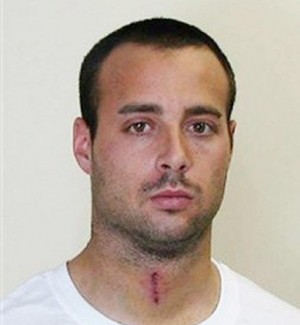
Terry Joe Sedlacek's parents worried that he was getting into drugs or alcohol when he started acting strangely during his junior year at Edwardsville High School.
He dropped out of the activities that used to interest him. He seemed confused. He missed class, and one time when the school called his mother, Ruth Abernathy, to say he hadn't shown up, she found him home on the couch, having forgotten he was supposed to be somewhere else.
"I said, 'What are you doing here? You're supposed to be at school,'" his mother remembers of the day in 1999. "And he said, 'Oh.'"
They tried to check him into rehab, but tests showed caffeine was the strongest thing in his system. Doctors diagnosed him as mentally ill and for years he took medicine — up to 18 pills a day at one point. But the drugs that worked for others seemed to do little for him. His physical condition deteriorated, too, and in 2003 he was in the hospital, so sick he was given last rites.
Finally a desperate battery of tests for everything from West Nile to SARS pinpointed two tick-borne diseases: Lyme disease and ehrlichiosis.
"I said 'You've got to be kidding me,'" Abernathy said. "I never knew a tick could do this."
Lyme disease can be tough to pin down, with a range of symptoms that can be mistaken for those of other health problems. Those infected may think they've just got the flu and might skip seeing a doctor, and doctors in areas where Lyme disease is not common could miss the correct diagnosis.
"The Lyme disease bacterium can infect several parts of the body, producing different symptoms at different times," the Centers for Disease Control and Prevention notes on its website. "Not all patients with Lyme disease will have all symptoms, and many of the symptoms can occur with other diseases as well."
Abernathy said she understands the disease can be difficult to diagnose, especially if it is not caught early. She wants the public and doctors to be better educated about tick-borne disease, but said she doesn't spend much time blaming doctors who didn't diagnose her son earlier.
"They didn't know, I didn't know," she said. "I just want my son back."
THE BITE
No one really knows when or where Sedlacek got Lyme disease. He was an avid hunter and outdoorsman who loved to spend time on a family member's property in Calhoun County, and his mother believes he probably encountered an infected tick there in 1998 or 1999.
In Illinois, the deer ticks that can carry Lyme disease have been spreading in recent years. Once contained to the northwestern part of the state, they are now found along the Illinois River and even in more urban areas, such as Cook County, according to Linn Haramis, an entomologist with the Illinois Department of Health. They've also been identified in Monroe County.
Deer ticks don't find Missouri as hospitable, according to Karen Yates, with the Missouri Department of Health and Senior Services. But in both states, other ticks carry other diseases, such as ehrlichiosis, Rocky Mountain spotted fever and tularemia.
For Sedlacek, who was put in a medically induced coma and given intravenous antibiotics to combat the Lyme disease and ehrlichiosis, the diagnosis came late. For a few months he did very well.
"We had our son back," Abernathy said.
But Sedlacek's rebound didn't last for long. After he got out of the hospital, oral antibiotics didn't seem to work as well. His family sought out experts and tried alternative treatments, with mixed success.
These days, Sedlacek, now 26 and living in Troy, Ill., with Abernathy, has difficulty speaking. He's got lesions on his brain. He's taking several drugs, including anti-seizure medication.
"He takes enough medicine at night to knock a cow out, but he only sleeps two or three hours a night," Abernathy said.
REBOUNDING
One Saturday last month, friends, family and other volunteers in "Ticks Suck" T-shirts held a fundraiser for Sedlacek at Arlington Greens Golf Course near Granite City.
"I feel sorry for people who get this," Sedlacek struggled to say at the fundraiser. "If they don't have the money or the family to do things …"
The funds raised are helping pay for treatment in Florida in a hyperbaric chamber that has helped others with his symptoms. He's now about halfway through the month of treatments, and his mother said in an e-mail that he is doing well and doctors have been able to reduce some of his medications.
"His speech was much improved after the first week of treatments as well as his sleep pattern," she wrote. "To have him able to join in on some conversations is a huge reward for us so far."
Abernathy wants others to become more aware of tick-borne disease and take precautions.
"It doesn't happen with every tick bite, but it's good to be cautious," she said. "Lyme disease, ehrlichiosis, are out there."
Experts recommend taking preventive measures when entering areas where ticks may be present. But they also say people shouldn't overreact.
"We don't want people thinking they can't go outdoors," said Yates, who coordinates Missouri's vector-borne disease program. "Avoid tick habitat if you can, but don't let that keep you indoors. Sitting on the couch is not a good health practice."
The "vast majority" of people who contract Lyme disease get a bull's-eye rash around the bite, Yates said. If caught at that stage, Lyme disease can usually be treated successfully with a round of antibiotics.
That's why knowledge about the disease is so important, Abernathy said.
"We went through it for nine years," she said, "and it can be cured in 30 days."
[email protected] | 314-340-8253